Older Home Insulation Farmington, NM
Farmington Spray Foam Insulation Pros routes older-home insulation requests to local contractors serving Farmington, NM and San Juan County.
Spray foam upgrades for mid-century and older homes in Farmington and San Juan County, from attics and rim joists to crawl spaces, exposed walls, and additions. Use the form to include the home's age, construction type, current comfort problems, and access details.
About This Service
Many Farmington homes date to the oil and gas boom years of the mid-twentieth century, when insulation was thin, air sealing was an afterthought, and additions were often added without matching the original envelope. A useful older-home request describes the age and construction type, which rooms run hot or cold, and what has already been tried, so a contractor can propose a realistic order of work instead of a one-size plan.
What Affects The Quote
- Home age, framing or masonry construction, and whether walls are open or finished.
- Which areas are in scope: attic, rim joist, crawl space, garage, addition, or exposed walls.
- Existing insulation type and condition, and whether it needs to be removed first.
- Evaporative cooler openings, ductwork, and other penetrations that need to be sealed.
Where spray foam fits in an older home
In an older home, foam works best where the building is already open or easy to reach. That usually means the attic or roofline, the rim joist, the crawl space, additions and garage conversions, and any wall that is exposed during a remodel. The attic and crawl space pages cover those areas in detail, while closed-cell foam is a common choice at rim joists and moisture-prone spaces.
What about finished walls?
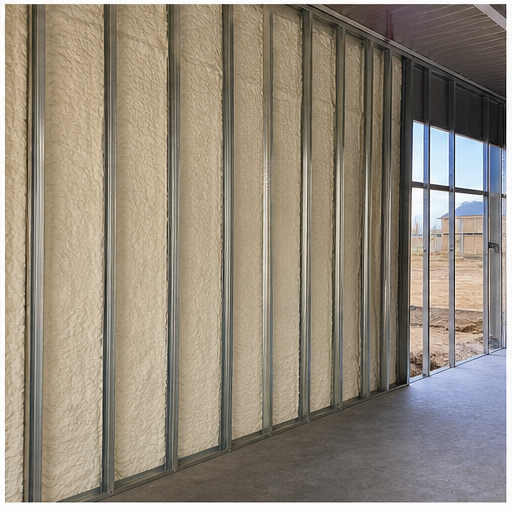
Spray foam cannot simply be added to a sealed wall cavity. If walls are closed and finished, the practical options are limited, and some contractors offer injection foam or dense-pack products. When a remodel, siding replacement, or addition opens the wall, that is the best time to put in a continuous layer of foam and air seal at the same time. Being honest about what is accessible helps a contractor avoid recommending work that does not fit.
Evaporative coolers, ducts, and combustion appliances
Older Farmington homes often have a roof-mounted or window evaporative cooler, and the opening below it can leak warm indoor air all winter if it is not sealed. Attic ductwork is another common source of loss, and air sealing around it can change how a house performs. When air leakage is reduced, gas furnaces and water heaters with atmospheric draft need to vent properly, so a contractor should check combustion safety as part of the job.
Testing before disturbing old materials
Homes built before about 1980 may contain asbestos-containing materials, and some attics hold vermiculite insulation that should be tested before being disturbed. A contractor will usually ask the home's age and note any old insulation, and testing is a reasonable first step. Planning for this before demolition or removal avoids stopped work and unexpected cost.
Comfort in both seasons
Farmington summers regularly reach the 90s and winters bring hard freezes, with a large daily swing between them. An older home that is insulated for only one season often stays uncomfortable in the other. Combining air sealing and insulation in the attic and at the rim joist usually does more for year-round comfort than adding thickness in a single spot. The spray foam cost guide explains how the scope of work affects an estimate.
Questions worth asking about an older-home bid
Ask which areas are included and in what order, whether air sealing is part of the price, how existing insulation will be handled, and how the contractor will check venting for gas appliances. For attic or roofline work, ask about ventilation and any ignition-barrier coating needed. Spray foam work connected through this site is performed by licensed, insured local professionals.
Older Home Insulation FAQ
Can spray foam be added to the walls of an older Farmington home?
Only where the wall cavity is open or can be opened, such as during a remodel, an addition, or when siding or interior finishes are removed. Closed walls in a finished home are usually treated with other methods, and some contractors offer injection foam. Describe the wall construction and what is accessible so a contractor can advise.
Which part of an older home should be insulated first?
The attic and the rim joist or crawl space are usually the highest-impact places because they are accessible and leak the most air. A contractor can help rank the options after reviewing photos and the home's construction.
Does an older home with a swamp cooler need special attention?
Yes. Roof-mounted evaporative coolers and their ducts create large openings in the ceiling plane that can leak conditioned air year-round. Mention the cooler and how it is closed off in winter so those penetrations can be sealed.
Is it safe to insulate over old insulation?
It depends. Compressed or damaged insulation may be removed first, and homes built before about 1980 can contain vermiculite or other materials that should be tested before being disturbed. See the attic insulation page for how existing insulation affects an attic quote.
Will tightening the house create ventilation or combustion problems?
It can if gas appliances are not vented properly. A contractor should check furnace and water heater venting and the home's ventilation plan when air sealing, particularly on older homes with atmospheric-draft equipment.