Commercial Spray Foam Farmington, NM
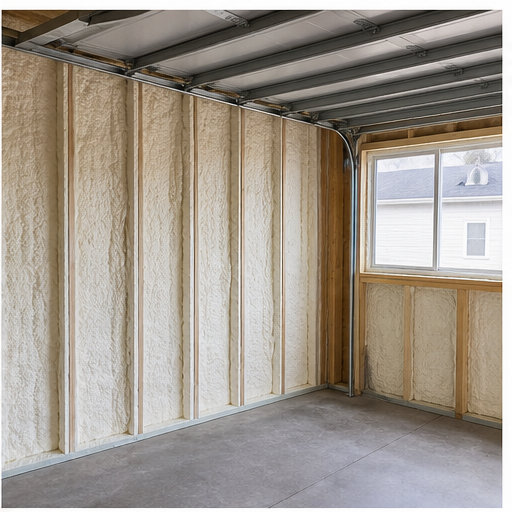
Farmington Spray Foam Insulation Pros routes commercial spray foam requests to local contractors serving Farmington, NM and San Juan County.
Commercial spray foam planning for offices, retail, warehouses, and tenant improvement projects. Use the form to include the property area, timing, access details, approximate size, and current condition.
About This Service
A strong quote request names the property city, the building type, the approximate area to be insulated, and the main goal for the project. That single paragraph of context is often the difference between a rough phone-quote and a bid that holds up once a contractor is on site.
What Affects The Quote
- Building type, framing depth, and whether framing or metal panels are exposed.
- Access, ventilation, cure/re-entry timing, and site conditions.
- Whether the job is new construction, a retrofit, or a repair after moisture or pest damage.
- Photos, measurements, and notes about existing insulation or symptoms.
Commercial buildings across Farmington and San Juan County
Commercial spray foam requests routed through this site range from small retail storefronts and office buildings along Farmington's main commercial corridors to warehouses, distribution buildings, and headquarters facilities tied to San Juan County's oil and gas service sector. Each building type has a different priority: an occupied office needs work scheduled around business hours and tenant traffic, a warehouse may prioritize roof insulation to protect inventory from temperature swings, and an oilfield service company's headquarters or shop may combine office space with an attached warehouse or fabrication bay that needs its own insulation plan.
Tenant improvement and occupied-building scheduling
Commercial spray foam work in an occupied building requires more coordination than a vacant new-construction shell. Odor, overspray containment, and noise all need to be managed around business hours, and multi-tenant buildings may require coordinating access and notice with neighboring tenants even if the work is confined to one unit. A tenant improvement project — insulating a newly leased space before a business moves in — is often easier to schedule since the space is typically vacant during the work, but it still needs to fit into a broader construction timeline alongside other trades.
Commercial roofing and building envelope considerations
Flat and low-slope commercial roofs common on Farmington office and retail buildings have different insulation considerations than a residential attic or a metal building roof. Roof insulation strategy often ties into the roofing system itself — whether foam is applied under a roofing membrane, from the interior side of the roof deck, or as part of a broader re-roofing project affects both the approach and the timing. A commercial quote request benefits from including the building's approximate age, roof type, and whether the insulation work is standalone or connected to a larger roofing or renovation project.
Warehouses, distribution buildings, and oilfield company facilities
Warehouse and distribution buildings in Farmington and Bloomfield often combine large unconditioned storage areas with smaller conditioned office or break-room spaces, and a strong quote request separates the two rather than treating the whole building as one insulation zone. Oilfield service companies operating in the San Juan Basin frequently have facilities that combine an office building, a covered shop or fabrication bay, and outdoor equipment storage, each with different insulation priorities. Describing which parts of a facility are occupied daily, which are used seasonally, and which are pure storage helps a contractor propose a scope that matches how the building actually operates rather than pricing the entire footprint as if every square foot needed the same treatment.
Access and prep for a commercial job
Commercial jobs typically require coordination around business operations, existing HVAC and fire-suppression systems, and any code requirements tied to occupancy type. Site protection for flooring, fixtures, and equipment is more involved in an occupied retail or office space than in a vacant shell, and scheduling may need to happen after hours or over a weekend to minimize disruption to customers or staff. Property managers should be prepared to share building plans, prior insulation work if known, and any code or inspection requirements tied to the specific occupancy classification.
Energy costs and commercial building performance
Commercial property owners in Farmington often start looking at spray foam after noticing utility costs climb during the peak of summer cooling season or winter heating season, particularly in older buildings that have never had their envelope evaluated. A poorly insulated roof or wall assembly forces HVAC equipment to run longer and harder to hold a set temperature, which shows up directly in monthly operating costs and can also shorten the working life of the mechanical equipment itself. Framing a spray foam request around a specific performance goal — lower run time on rooftop units, more even temperatures across a large retail floor, or eliminating a persistently cold or hot zone — gives a contractor a clearer target than a generic request for insulation.
Questions to ask about a commercial spray foam bid
Ask how the contractor plans to work around occupied hours, existing tenants, and building systems. Ask whether the bid includes any required inspections, permits, or code documentation for the occupancy type. Ask how the project will be phased if only part of the building is being insulated at a time, and what the realistic timeline looks like from start to substantial completion. A property manager overseeing multiple buildings may also want to ask whether the same contractor can bid similar work across more than one Farmington-area property, and whether a phased, multi-building schedule is available instead of treating each site as a separate bid process. Getting these answers in writing before work begins tends to prevent disputes later over scope, cost, and scheduling.