Closed Cell Spray Foam Farmington, NM
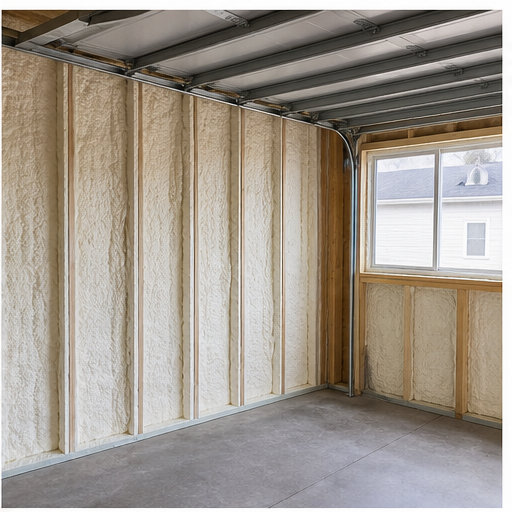
Farmington Spray Foam Insulation Pros routes closed-cell spray foam requests to local contractors serving Farmington, NM and San Juan County.
Closed-cell foam for air sealing, moisture resistance, rim joists, shops, and metal buildings. Use the form to include the property area, timing, access details, approximate size, and current condition.
About This Service
A useful closed-cell quote request names the area being insulated, the target thickness, the surface being sprayed, and whether moisture, condensation, or structural rigidity is the main driver behind choosing this foam type over a lighter alternative.
What Affects The Quote
- Target thickness and total square or linear footage to be sprayed.
- Surface type — wood framing, concrete, or exposed metal panel.
- Ignition-barrier or code requirements for occupied spaces.
- Access, moisture history, and whether old insulation needs removal first.
Why closed-cell foam shows up so often in San Juan County
Closed-cell spray foam is denser than open-cell foam and typically delivers a higher R-value per inch, along with real resistance to moisture and vapor movement and added rigidity to whatever it is sprayed against. That combination lines up with three project types that come up constantly around Farmington: rim joists and crawl-space walls where ground moisture is a factor, metal buildings and oilfield service shops where the interior panel skin can sweat when warm air meets a cold overnight surface, and additions or remodels where framing depth is limited and every inch of R-value matters. Because closed-cell foam is itself a vapor retarder at sufficient thickness, it is frequently the product a contractor reaches for when the goal is moisture control rather than comfort alone.
Closed-cell foam and the Four Corners' daily temperature swing
San Juan County regularly sees a 30 to 40 degree difference between a summer afternoon high and the pre-dawn low, and that daily cycle puts real stress on any assembly that is not fully air sealed. Closed-cell foam's rigidity helps it hold up to that kind of thermal cycling better than a softer product, and its higher R-value per inch matters more in spaces where depth is limited, such as a rim joist band or a shallow retrofit cavity. The same swing is part of why condensation shows up on uninsulated metal panels here even in a climate that is dry most of the year — a cold metal skin overnight meets warmer, more humid air the next morning, and that transition is exactly the kind of moisture cycling closed-cell foam is built to resist.
Closed-cell foam on oilfield and agricultural shop buildings
San Juan Basin oil and gas activity has left Farmington, Bloomfield, and Aztec with a large number of steel-frame service buildings, fabrication shops, and equipment yards, and closed-cell foam applied directly to the interior of the metal panels is one of the most common ways contractors address condensation risk in these buildings. The foam acts as both insulation and vapor barrier when sprayed to sufficient thickness, which matters for shops that store equipment, parts inventory, or vehicles that can be damaged by dripping condensation. The same logic applies to agricultural equipment sheds and shop buildings on ranch and farm properties, where a metal roof over stored machinery or feed has the same condensation exposure as a commercial shop.
Questions to raise before choosing closed-cell foam
Ask what thickness is being quoted and why, since closed-cell foam's vapor resistance and R-value depend on reaching a minimum depth rather than any coat of foam counting the same. Ask how the contractor plans to handle ignition-barrier or thermal-barrier requirements if the area will be occupied or used as living or working space. For crawl spaces, ask how the closed-cell plan interacts with any existing or planned ground vapor barrier. For metal buildings and shops, ask how condensation risk at fasteners, seams, and roof penetrations is being addressed, not just the flat panel area, since those details are common places for a rushed job to fall short.
Official code and permit checks
Before approving exposed foam, occupied-space work, or a larger retrofit, property owners can cross-check the current City of Farmington building permit process, San Juan County Building Department guidance, and New Mexico Construction Industries Division energy-code resources. Those official references help frame questions about ignition barriers, thermal barriers, installed thickness, inspection timing, and whether the project needs documentation beyond a basic insulation bid.
Access and prep on a closed-cell job
Closed-cell foam is sprayed in lifts to reach a target thickness, so access matters as much as square footage. A rim joist with clear crawl-space access sprays differently than one behind finished drywall, and a metal building bay full of stored equipment takes longer to mask and protect than an empty shell. Removing old, damaged, or compressed insulation before spraying is common on retrofit work, and that removal and disposal is often priced separately from the foam application itself. Noting current access conditions, whether the space is empty or full of stored items, and any known moisture or condensation history helps a contractor scope the job accurately instead of adjusting the price after arriving on site.
Closed Cell Spray Foam FAQ
Is closed-cell foam better than open-cell foam?
Neither is universally better — closed-cell offers more R-value per inch, moisture resistance, and rigidity, while open-cell is lighter, less expensive per board foot, and better for sound control in protected interior spaces. The right choice depends on the specific area and its moisture exposure.
Does closed-cell foam work as a vapor barrier?
At sufficient thickness, closed-cell foam has a low enough vapor permeability to function as a vapor retarder, which is part of why it is used on crawl-space walls and metal building interiors. The exact thickness needed should be confirmed with the contractor for the specific application.
Can closed-cell foam help with metal building condensation?
Yes. Applying closed-cell foam to the interior of metal panels is one of the most common ways contractors address roof and wall condensation in San Juan County shops and agricultural buildings.
Is closed-cell foam safe for occupied spaces?
Closed-cell foam can be used in occupied spaces, but most codes require an ignition-barrier or thermal-barrier coating over exposed foam in living or working areas. Ask the assigned contractor how that requirement will be met.
How thick does closed-cell foam need to be sprayed?
Target thickness depends on the area, the R-value goal, and whether moisture resistance is the priority. A contractor will typically recommend a thickness after reviewing the specific project details submitted in the quote request.