Open Cell Spray Foam Farmington, NM
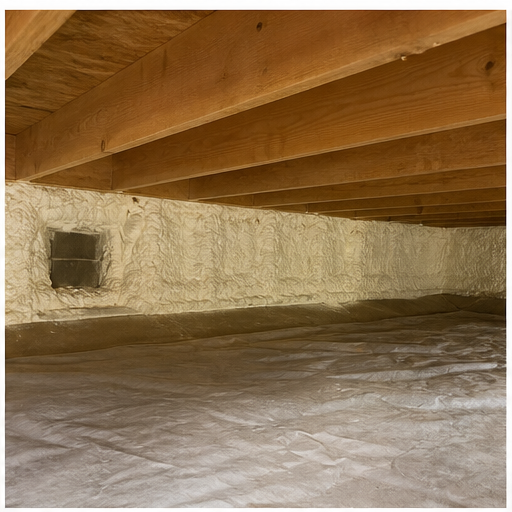
Farmington Spray Foam Insulation Pros routes open-cell spray foam requests to local contractors serving Farmington, NM and San Juan County.
Open-cell foam is a lighter, softer product that expands to fill a cavity fully, which makes it a common fit for protected interior walls, rooflines, additions, and sound control. Use the form to include the property area, timing, access details, approximate size, and current condition.
About This Service
A useful open-cell quote request names the area being insulated, the framing depth available, whether the cavity is open or already covered, and the main goal — comfort, sound control, or air sealing.
What Affects The Quote
- Square footage and framing depth available for the open-cell fill.
- Whether framing is exposed or the job requires cutting into finished walls or ceilings.
- Ignition-barrier or thermal-barrier coating requirements for the finished space.
- Access, ventilation, and cure or re-entry timing before the area can be used again.
Where open-cell foam fits in a Farmington building
Open-cell foam expands to fill a stud or rafter cavity completely, which makes it a common choice for interior partition walls between a garage and living space, additions built onto an existing house, and the underside of a roof deck in a conditioned attic. It is also used for sound control between floors or rooms, and for comfort upgrades where the priority is a fully sealed cavity rather than maximum R-value per inch. Because open-cell foam absorbs moisture more readily than closed-cell foam, it is generally kept away from crawl spaces, exterior-exposed applications, and areas with a real chance of standing water or ground contact — those jobs are more often scoped as closed-cell work instead.
Sound control and comfort upgrades
Open-cell foam's soft, flexible cell structure absorbs sound better than fiberglass batts of the same thickness, which is one reason it comes up so often for interior partition walls in Farmington homes — between a bedroom and a laundry room, around a home office, or along the wall that separates living space from an attached garage. It is also a common comfort upgrade for additions and remodels where the goal is simply a tighter, more even-feeling room rather than a specific R-value target. Because it fills irregular cavities completely, including around wiring, plumbing, and blocking, open-cell foam tends to close the small gaps that fiberglass batts leave behind, which is often what homeowners notice first as a draftier room becomes more comfortable.
Open-cell foam and Farmington's dry climate
For most of the year San Juan County's ambient humidity is low, which suits open-cell foam's vapor-open character in protected interior assemblies. That changes for a few weeks during the summer monsoon pattern, when short bursts of humid weather move through the Four Corners region and interior moisture can spike near kitchens, bathrooms, and laundry areas. A contractor scoping an open-cell job will usually ask about those rooms specifically, since a vapor-open product needs a reasonable interior humidity level to perform as expected. Open-cell foam's air-sealing quality is also a real asset against the fine windblown dust that is common in San Juan County during dry, breezy stretches, since a sealed cavity keeps more of that dust out of the living space.
Questions worth asking about an open-cell bid
Ask what R-value the quoted thickness is expected to reach, since open-cell foam has a lower R-value per inch than closed-cell foam and needs a deeper cavity to hit the same target. Ask how the contractor plans to handle ignition-barrier or thermal-barrier requirements for any area that will be occupied or used as living or working space. If the cavity already has plumbing, wiring, or ductwork routed through it, ask how that affects coverage and whether any of it needs to be rerouted first. Ask about the cure and re-entry timeline, particularly for additions or remodels where trades need to follow behind the foam crew.
Access and prep for an open-cell job
Masking finished flooring, cabinetry, and any surfaces near the spray area is standard prep on an open-cell job, since overspray trims cleanly but is easier to prevent than remove. Older sections of some Farmington homes still have lath-and-plaster or irregular stud spacing behind the drywall, which can change access and trim time compared to a straightforward modern stud bay. Removing existing fiberglass batts before spraying is common on retrofit projects, and that removal and disposal is often scoped and priced separately from the foam application itself. Noting whether the space is empty, occupied, or full of stored belongings helps a contractor plan the visit accurately. Ventilation during and after the spray is also part of the prep conversation, since the area typically needs to sit unoccupied for a set cure window before trim, drywall, or finish work resumes, and a contractor should be able to give a realistic re-entry timeline before the job starts rather than after.
Open-cell versus closed-cell: how Farmington contractors decide
The choice between open-cell and closed-cell foam usually comes down to moisture exposure, required R-value per inch of available depth, and whether the assembly needs added structural rigidity or vapor resistance. A protected interior wall or a roofline in a conditioned attic often works fine with open-cell foam, while a rim joist, crawl-space wall, or metal building interior more often calls for closed-cell foam because of moisture and condensation risk. Cost per board foot is typically lower for open-cell foam, but that difference can narrow or reverse once a project needs the extra depth open-cell requires to hit the same R-value as a thinner closed-cell application, so the two products are not always a simple cheaper-versus-pricier choice once the full scope is considered. The closed-cell spray foam page covers that side of the comparison in more detail, and a quote request that names the specific area and its moisture exposure helps a contractor recommend the right product instead of defaulting to one or the other.